
The Art of a Harmonious Holiday

Creating a Home for Gathering, Connection & Joy
Practical interior design and Feng Shui ideas for welcoming people home this season, without adding more to your home.

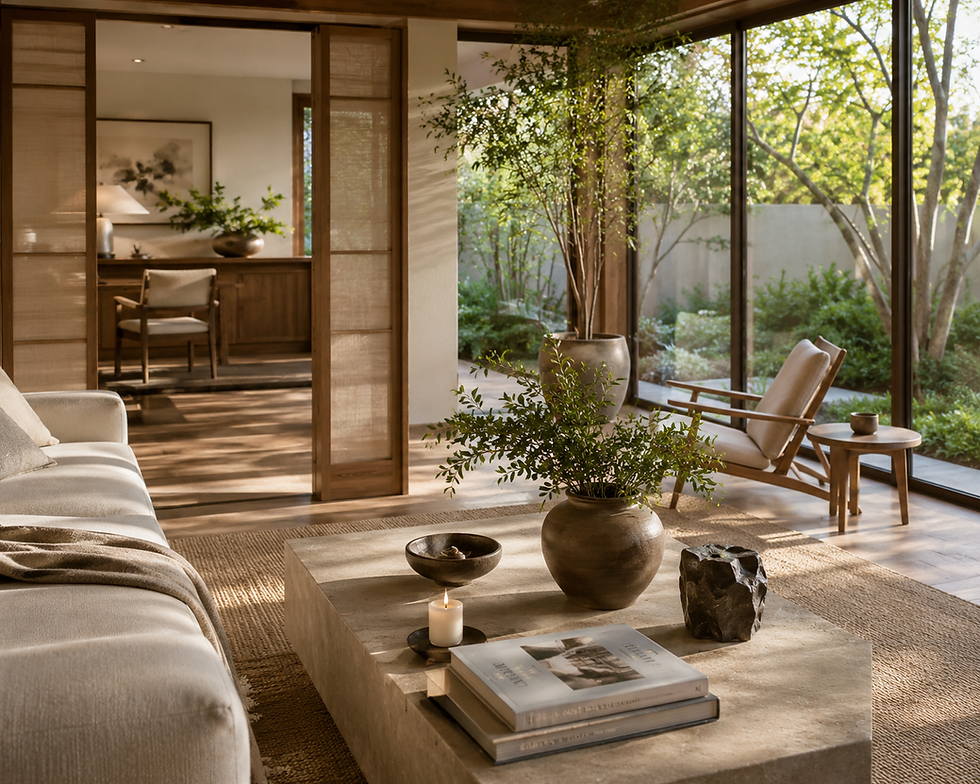
Every year around this time, I hear some version of the same worry: I want everyone to feel welcome, but I don't have time to make the house perfect. The calendar fills, the guest list grows, and somewhere between the shopping and the cooking, hosting starts to feel like a performance.
Here is what years of designing homes, and walking through them with Feng Shui in mind, have taught me: guests rarely remember perfectly arranged pillows. They remember how they felt when they walked in. Was there a place to set down a coat? A chair that invited them to stay? Light that made the room feel warm instead of bright?
A harmonious holiday isn't about adding more. It's about preparing your home for the people in it. So before you buy another wreath, ask one question: How do I want this home to feel when the door opens? The six ideas below will help you get there.
1. Begin at the threshold
In Feng Shui, the entry is where people (and the energy of a home) first meet the rest of the house, so it sets the tone for everything after it. Practically, it is also where a gathering most often gets stuck. Clear the path from the door, give coats, bags and shoes an obvious place to land, and use warm light so arrival feels easy rather than awkward.
One seasonal arrangement placed with care is usually more inviting than many decorations competing for attention. That could be a bowl of citrus, a mirror that catches candlelight, or a few branches in a heavy vessel.
Design detail: If guests are arriving after dark, walk their route yourself, from the driveway or sidewalk to the door, and check visibility and footing. A well-placed lantern or path light does more for a welcome than another garland.

2. Make room for the gathering
Before you style the table, look at the movement around it. Can someone pull out a chair without hitting a wall? Can guests reach the drinks without cutting through a conversation? Is there a place where a quieter guest can sit and still be part of things?
Try this: Where your space allows, leave enough room behind the dining chairs for people to pass comfortably; about three feet is a helpful guide. Pull a few chairs into small conversation groups, angled toward one another, instead of lining them along the walls. Put the drink station away from the kitchen's work zone so the cooks and the guests aren't sharing the same small stretch of floor.
Feng Shui perspective: When I walk through a home before a gathering, I look at circulation first. Feng Shui describes the movement of qi, or life energy, through a space. In design terms, that means open pathways and furniture that draws people toward one another. The goal is ease, not a formula.
3. Let lighting set the mood
Layered lighting does more for a gathering than any centerpiece. Combine soft ambient light, task lighting where food is prepared, and a few accents such as table lamps, candles or a picture light. Dimmers are especially helpful as the evening moves from preparation to dinner to lingering conversation. Try not to rely on one bright overhead fixture for every moment of the night, and choose warm bulbs (around 2700K) so wood, linen and skin tones look their best.
Light is only one part of how a room feels. Think about the other senses as well:
Texture: linen, wool, wood, woven fibers and ceramic make a room feel soft and lived-in.
Scent: fresh greenery, citrus or something warm in the oven. Keep it subtle, not overwhelming.
Sound: a playlist set low enough that no one has to raise their voice.
Design detail: Keep candles well away from greenery, linens and anything flammable. Use flameless candles where children or pets will be close.
4. Layer meaning, not clutter
Fresh greenery, heirloom linens, a well-loved serving piece or artwork with a personal story can give a gathering a sense of belonging. Let your holiday pieces work with the room's existing materials and color story, rather than requiring a complete seasonal makeover. Here in Florida, that might mean magnolia leaves, citrus, orchids, natural wood and woven textures instead of recreating a snowy northern scene.
The dining table deserves the same thinking. During the holidays it becomes a working surface: someone wraps a gift there, children draw, appetizers come out and coffee lingers. Build a simple foundation that can change through the day, such as a low run of greenery, a wooden bowl of seasonal fruit, a few candles and linen napkins. Then leave open space so the table can still do its job. Decorate the table for the life you want to happen around it.
A collected, personal space often feels more luxurious than a perfectly coordinated display. The right room recognizes you.

5. Make traditions feel welcome
Christmas, Hanukkah and other year-end celebrations each carry their own meanings and rituals. Rather than blending them into one decorative theme, make room for the specific practices, and people, being celebrated. If your household lights a menorah, give it a steady, heat-safe place of its own; many families display it in a window, with curtains and greenery kept well clear. A tree needs space of its own, too, so it doesn't block the path to the table.
When you're hosting a mix of traditions, ask your guests what would make them feel at home. It might be a place for a ritual object, a dietary need, accessible seating or simply a quieter corner to step away and reconnect.
Welcoming design is attentive design.
6. Prepare for people, not perfection
The best hosting plan usually includes a few less glamorous decisions: an uncluttered guest bath, a convenient drink station, enough comfortable seating and clear kitchen work surfaces. If someone is staying overnight, fresh linens and a little open space on the nightstand go a long way. Hospitality begins with making room for others.
Take a final walk through your home from a guest's point of view. What feels confusing, crowded or hard to navigate? Adjust those spots first.
Before guests arrive
Clear the entry and the path to the door.
Check indoor and outdoor lighting, and switch to warm, dimmable light.
Create a spot for coats and bags.
Test seating and walking routes.
Clear a counter for serving.
Refresh the guest bath.
Add one detail that feels genuinely personal.
A home that carries you beyond the holidays
The most valuable improvements don't disappear when the decorations are put away. Better lighting, more thoughtful furniture placement and inviting places to gather support everyday life all year long. That's where your space meets your next chapter.
If you're ready to rethink how your home welcomes, supports and connects the people in it, a Cloud 9 Vision Session is a thoughtful place to begin. Sessions are available virtually or in your home in the Tampa Bay area.
Many blessings x9,
Lisa M. Alban
Cloud 9 Feng Shui
Related reading: Your Home Is in Relationship With You

Comments